
Permanently secure in position
When using linear units vertically, it was often common practice to hold the load solely by the brake provided in the drive motor. However, this leaves a residual risk for employees who are in the danger zone, e.g. during maintenance work, because the vertical axis can drop unintentionally. One requirement of the applicable Machinery Directive is to reliably prevent this during risk assessment. IEF-Werner offers an additional pneumatic parking brake for some linear units, which guarantees a secure hold.
Furtwangen, 04.04.2022 – If service personnel must enter the machining area of a machine, the drive axes must be put in a safe position. If heavy loads are also hanging on the vertical axes, they can drop due to gravity. To prevent this, the vertical axes are usually secured with brakes in the drive motor. "However, dirt or mechanical wear can severely impair their effect," explains IEF product consultant Thomas Hettich. In addition, there are several transmission links such as couplings or toothed belts between the brake integrated in the motor and the basic body of the axis, which could fail. In addition, there is a risk that when a motor is dismantled, e.g. for maintenance work, there may even be a sudden drop in the load, putting employees at considerable risk.
For designers and mechanical engineers, the risk assessment must reliably prevent the unintentional lowering of vertical axes. This means that the parking brake in the motor is no longer sufficient for many applications. Users are therefore increasingly demanding an additional braking element that can be integrated into the linear unit or mounted externally.
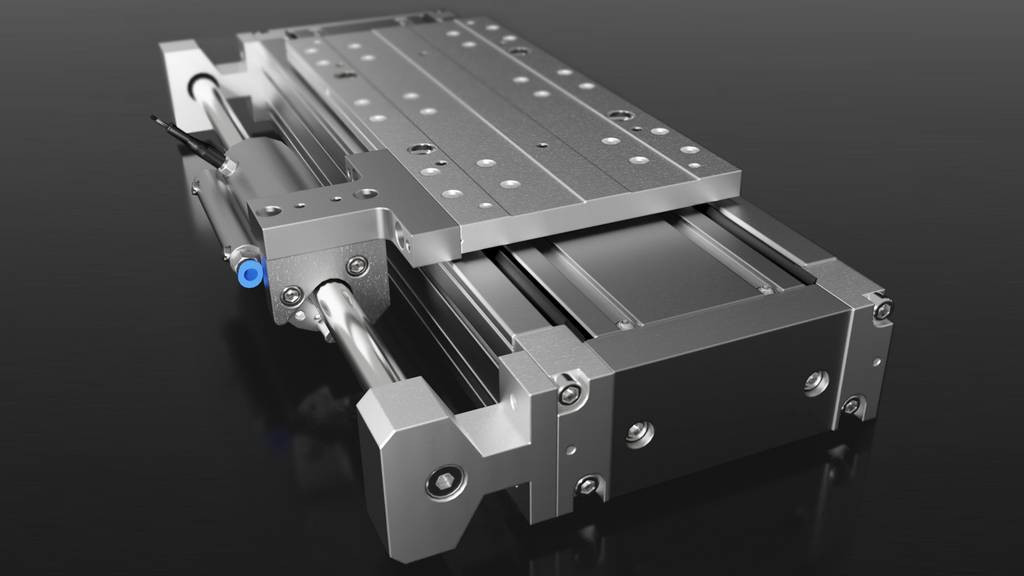
IEF-Werner now offers optional parking brakes for various toothed belt and spindle axes. Depending on the linear unit, a clamping element with a holding force between 400 and 750 Newton is installed. "The braking force always acts on the guide rail - the greater this is, the greater the clamping force," says Hettich. The parking brake is closed without energy and pneumatically opened. Five million static clamping cycles and up to 500 dynamic braking cycles are possible.
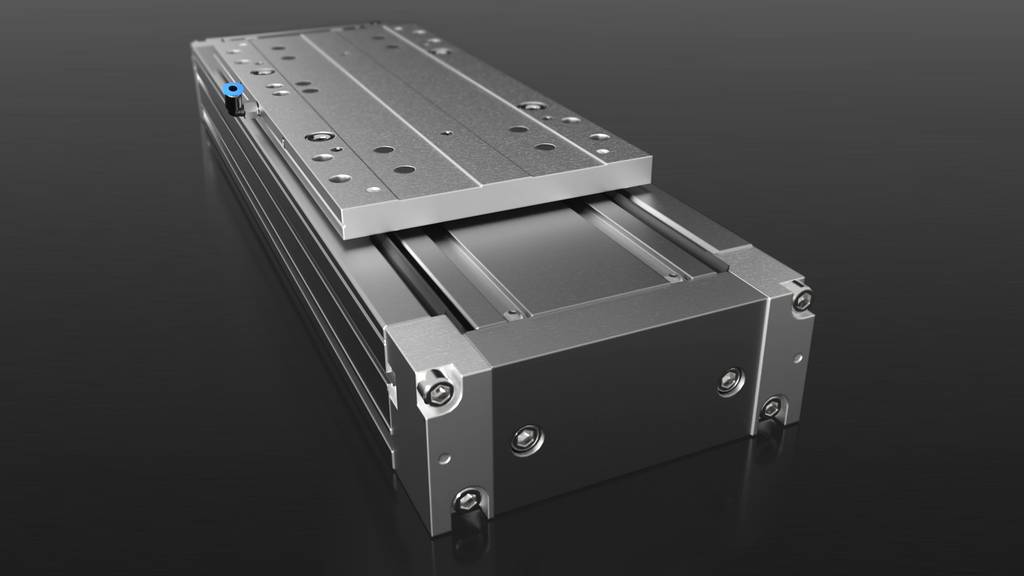
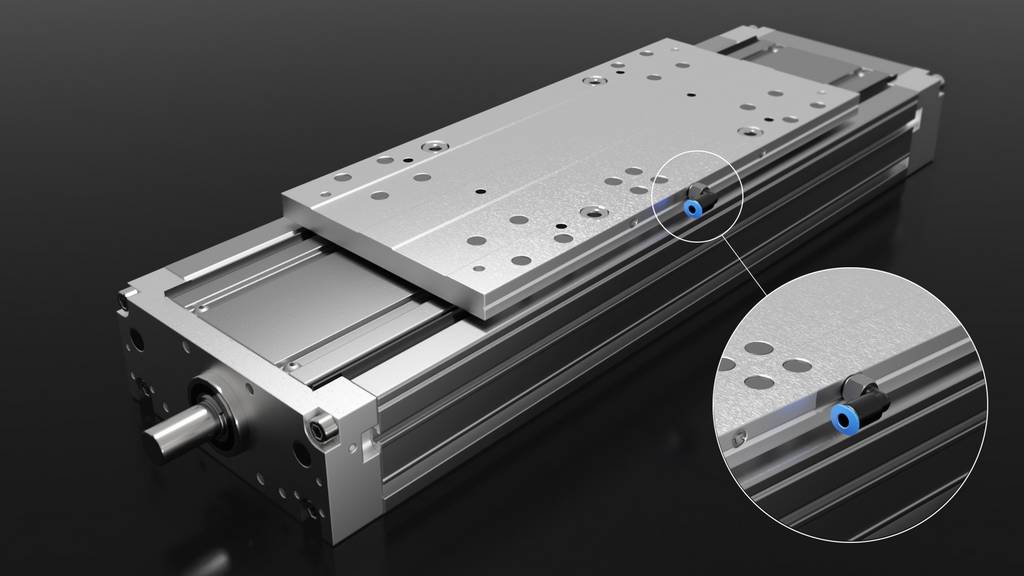
As soon as the axis is de-energised or the control is deactivated, the parking brake is active - for example, when an employee switches off the machine in the evening or when the safety doors are opened during operation after the linear units have been stopped (STO [Safe Torque Off]). Due to the compact installation dimensions, users prefer the parking brake to be integrated into the axis. This means that it is not visible from the outside except for the pneumatic connection for the clamping element, and it can also be used in confined spaces. However, the slide must have a certain length so that the brake can be integrated. "The slide is then 300 mm long on the linear unit Module 160/15, for example," describes Hettich.
The new solution has already proven itself in the linear unit Module 160/20 ZR10. The automation specialist now offers this option for other toothed belt and spindle drives, for example for the linear units with toothed belts Module 80/15 and Module 160/15 or the spindle axis profiLINE 140 - each with a clamping force of 400 Newton.
